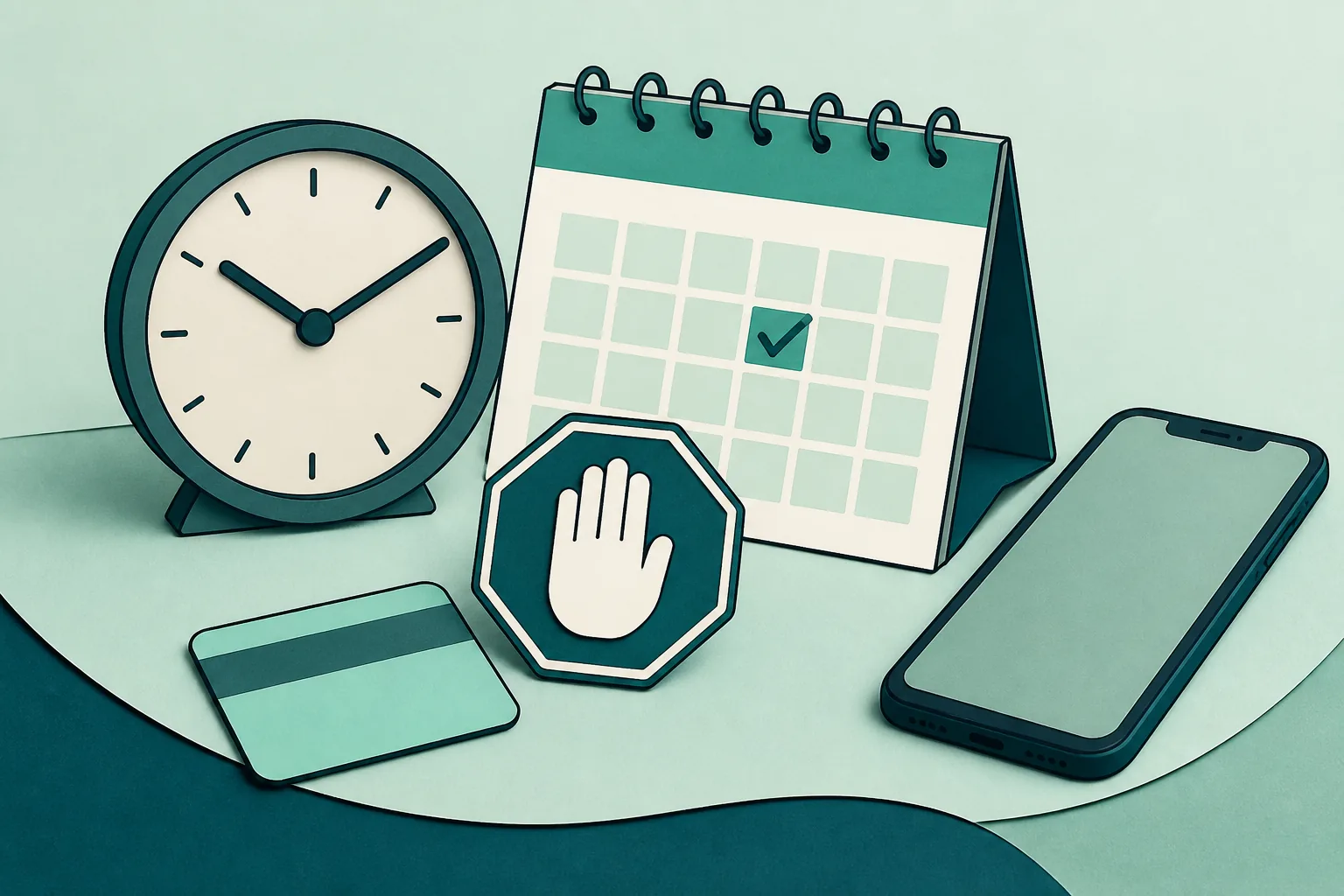
If control is slipping, act before the next session
Warning signs include chasing losses, hiding activity, borrowing to gamble, missing responsibilities or feeling unable to stop. A pause is useful; a formal block is stronger when willpower keeps being negotiated away.
Set account limits
UK-licensed operators provide tools such as deposit limits, time reminders, time-outs and self-exclusion. Set limits while calm, not midway through play. A limit should protect essential spending rather than test how much can be afforded.
Use blocking tools
GAMSTOP provides free self-exclusion across online gambling businesses licensed in Great Britain. Device-level blocking software and bank gambling blocks can add separate layers.
Speak to someone
GamCare provides confidential information, advice and the National Gambling Helpline. GambleAware directs people to tools and treatment support.
Check the licence
The UK Gambling Commission register identifies licensed businesses and explains complaints routes. It is a regulatory resource, not an emergency support line.